
How to write a treatment for a film, and what is the difference between a script rewrite and a polish?
FIRST THERE WAS PART 1
You do not have to start with Part 1. Backwards do some people think. But script development is a linear process, and Part 1 talks about the documents you will need to create first – so consider beginning here. After a logline comes a beat sheet outline; then story cards to help you refine your story’s structure. And if things go well, after 20 plus hours of narrative gymnastics, you will be ready for step 4:
4. THE TREATMENT
WHAT IT IS…
In feature films, a treatment could best be described as a story outline that runs for longer than three pages. Many are as long as twelve or more pages, but 5-7 pages is the median for a two hour film. In TV, a treatment is most likely to be required for individual episodes, and the reason for that is the role that treatments play in script development as a whole.
A treatment provides a fleshed out mockup for the script. A good treatment is like Homer himself telling your story by the fire. With this script development document, for the first time you have art in your hands, not notes, and you get a feel for your characters, for the tone of the story, and the hardest part of writing – for the why of your story – the theme.
WHY USE IT…
To get paid? After an outline, the treatment is the biggest step in a development contract before the first draft of the script. It is a tangible and presentable document which producers expect before moving to script. In some cases, it represents the end of the job, as it is the first script development document that everyone uses to decide – ‘is this a story we will invest not only our money to bring to the screen but four years of our life and our sanity?’ Often the answer is nope.
As a writer working on a spec script for sale, or to shoot yourself, the treatment is the minimum you can use to register copyright and feel safe. It is also an incredibly useful step in the writing process, and yet it is the step most often skipped. Those who write treatments will tell you the format finally allows you to shape your story around a thematic core before you get lost in the trees of the script.
Days spent writing treatments are often whole weeks saved rewriting the script.
WHAT MAKES A GOOD TREATMENT
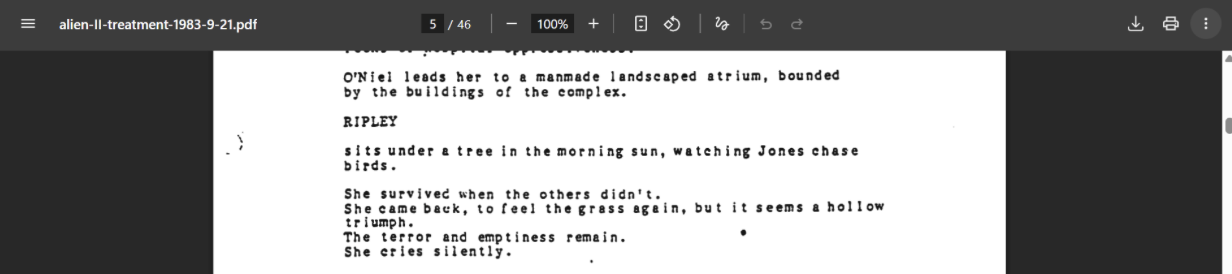
This is a matter of taste. It is worth noting that the reader is most likely reading out of obligation, not because they have been itching all day to sit down with your masterpiece. So, however you want to do it, show them you are a storyteller in the first few lines; use language pared down to a minimum, and write visually so they know this is a film. One client told me – “I want James Cameron’s treatment style”. I have still never come across a better reference. But Cameron’s are 40-50 pages long.
WHAT CAN GO WRONG
- Your storytelling style reads like ‘this happens then this happens then this’ without saying why each moment matters. Without narrating. All new writers do this. Remember Homer.
- You write 46 pages, and are not James Cameron. Or Homer.
5. SCRIPT
How to write a screenplay? For that you are going to need a course, not a bullet point. Start here: https://www.praguefilminstitute.cz/how-to-write-screenplays-for-film-and-tv/
6. REWRITES
WHAT ARE THEY
The answer is not as obvious as you might think. A rewrite is a structural reorganisation of a script – one which happens also to be written out fully. It is often much more than cutting or rewriting scenes – it might involve cutting or merging central characters, replacing whole plotlines, rewriting entire acts. While two rewrites are common in a contract, the reality can easily be ten.
WHY USE THEM
Do not think of each draft as a pitch for the final film – ‘maybe this will be the one!’. Script development more than anything is a process of understanding – understanding the story you are trying to tell. Look at rewrites as a ritual for conveying you to the point of epiphany. If you have not leapt from your seat and declared, “Oh my GOD! That is what this story is about!” You have not been rewriting enough. Watch your editor reach for the revolver in the drawer when you shout it for the first time in the editing room.
Script development is a process of understanding the story you are trying to tell.
WHAT MAKES A GOOD REWRITE
Significant changes which improve the story.
WHAT CAN GO WRONG
- You don’t make enough changes.
- You spend too much time polishing when another rewrite is around the corner.
7. POLISHES
WHAT ARE THEY
Polishes are like waxing the Lamborghini. First you need the Lamborghini. The body of the script is done – everyone loves the story, the characters and the script. You just need to get those peaks a little higher and those troughs a little deeper – reach for those pithy lines people will quote, make grander that monologue, and more scintillating that di. You are touching up what is now approved. You have already won.
WHY USE IT THEM
Rewrites are focused on making the mechanics of the story work – polishes ensure the finished product is ready for shooting. This is actually a lot of work, since every line will be chewed over by your actors and should come from a place of emotional truth issued through channels of drama.
WHAT MAKES A GOOD POLISH
Great lines that were not there before. Better functioning scenes. The eradication of every single moment of clunkiness, along with every single error.
WHAT CAN GO WRONG
You only polish the dullest spots on your Lamborghini. You don’t scrub hard enough. You do not realise, but you are polishing a Mazda.