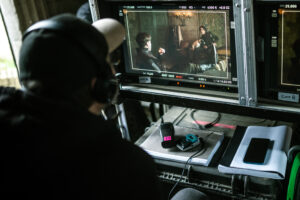

Depth of field is one of the key choices filmmakers make about how a shot looks – is everything around your character going to be in focus, or blurred?
QUICK GUIDE TO DEPTH OF FIELD
Depth of field is the filmmaker’s choice between sharp focus throughout the frame (deep focus) or blur around the subject (shallow focus).
Shallow focus: Only the subject stays sharp; background/foreground blurred. Creates intimacy, isolation, and beautiful bokeh. Common in romance, drama, thrillers. Achieve with wide aperture, long lenses, distance between the subject and background.
Deep focus: Everything in frame stays sharp. Gives viewers freedom to explore details, emphasizes the setting, supports ensemble scenes and long takes. Common in comedy, war films, epics. Achieve with narrow aperture, wide-angle lenses, increased camera distance.
Moderate depth of field: Natural separation without extreme blur—mimics human vision. Common in TV dramas prioritizing performance over visual style.
Don’t confuse: Depth of field (creative choice about what’s sharp) vs. depth of focus (technical sensor tolerance—not a storytelling tool). For common mistakes and learning exercises read on…
SHALLOW DEPTH OF FIELD
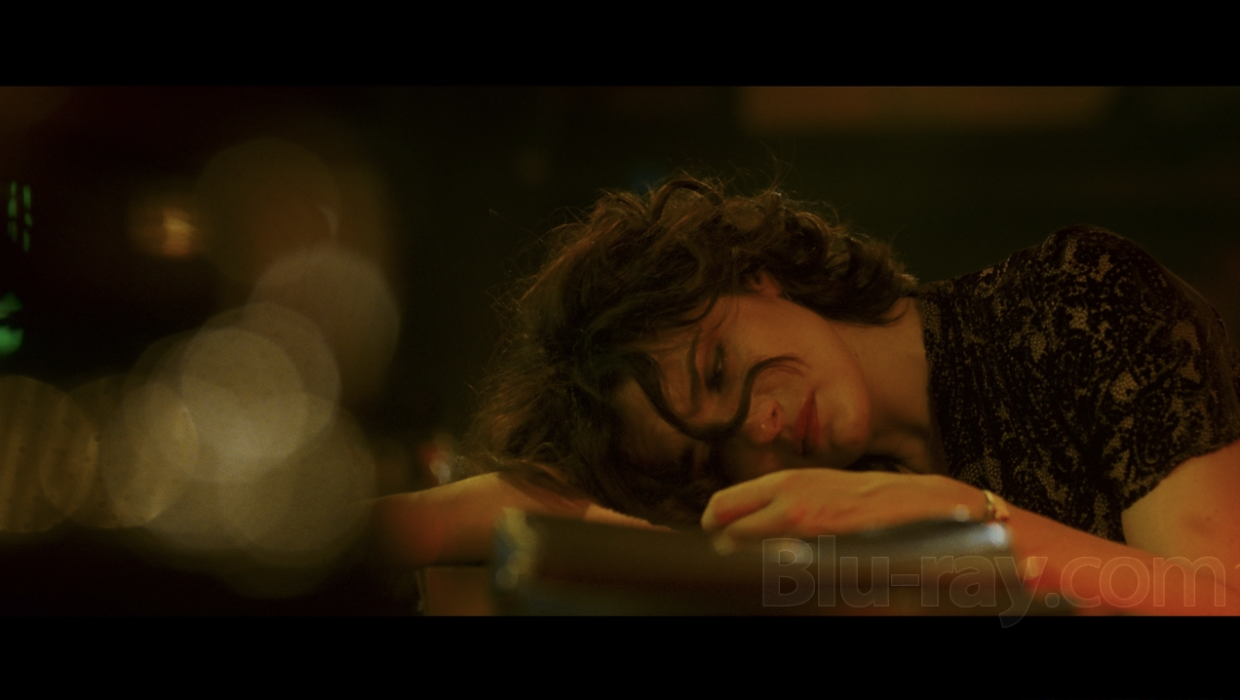
WHAT IT IS
When only the subject is in focus in the frame. Anything behind your character will be out of focus – and so will anything nearer to the camera. Also known as shallow/narrow focus.
WHY USE IT
Shallow focus is:
Highly aesthetic: shallow focus creates beautiful images. The bauble-like blurred circles we call bokeh balls are created with shallow focus.
Immersive: the character becomes the focus of the shot – the viewer is locked into their inner world, and not distracted by the setting.
Isolating: a character can seem more alone when the outer world is a blur.
Voyeuristic: shallow focus can give the impression of a POV – as if someone is watching from a distance.
The character becomes the focus of the shot – the viewer is locked into their inner world.
HOW TO CREATE IT
There are several ways to isolate a character using shallow depth of field:
Wide aperture. A low f-stop reduces depth of field, throwing more of the image out of focus and producing background blur. This is the main way bokeh is achieved.
Subject–background separation. Increasing the distance between the subject and the background increases background blur, helping the subject to stand out.
Long lens. Telephoto lenses bring planes of distance closer together while also magnifying blur – this makes the focus look shallower. Try an 85mm, 100mm, or longer.
POPULAR GENRES FOR SHALLOW FOCUS
Romance, drama, biopic, thriller and art house: when a character’s internal world is a light of its own, shallow focus can help it shine.
DEEP FOCUS
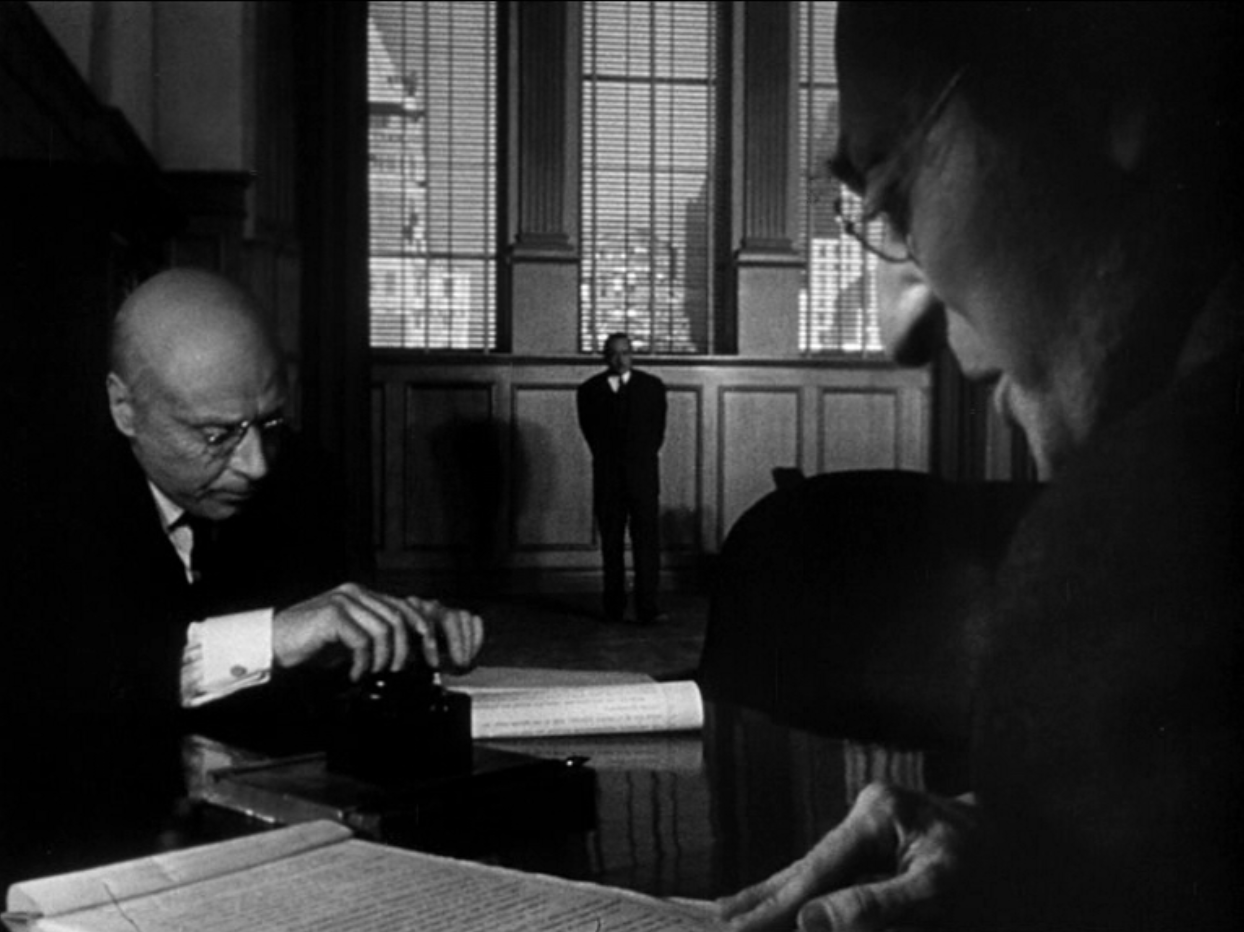
WHAT IT IS
When all elements of the frame are in focus – subject, background, and foreground.
WHY USE IT
Deep focus promotes:
Objectivity: in film theory, deep focus is associated with the image as undisputed fact.
Viewer freedom: the audience is free to explore other details of the frame, and discover production design details.
Story world: when the setting is important, be it a mountain location or a meticulously designed set, deep focus can bring the characters into the setting and the setting into the characters.
Ensemble scenes: multiple characters can bring the frame to life at once.
Long takes: deep focus captures so much that it reduces the need to cut.
The audience is free to explore other details of the frame.
HOW TO CREATE IT
There are several ways to achieve deep focus:
Narrow aperture: a high f-stop increases depth of field, keeping more of the image sharp.
Camera distance: moving the camera farther from the subject increases the area in focus and keeps more of the scene sharp.
Wide-angle lens: shorter focal lengths naturally provide a larger depth of field (14-28mm)
POPULAR GENRES FOR DEEP FOCUS
Comedy, Hollywood drama, war films, social realism, epic, political thrillers – deep focus is enlisted by any genre in which the setting is a character, or the background carries important narrative details.
MODERATE DEPTH OF FIELD
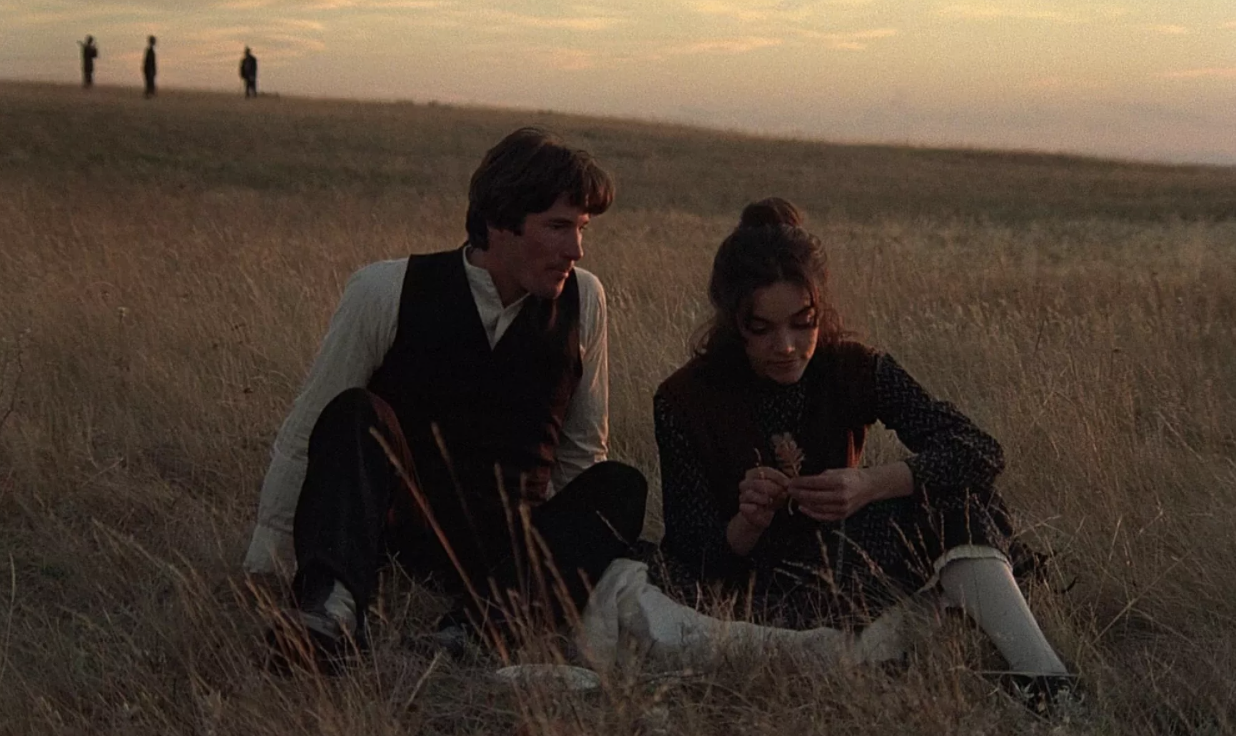
Much cinematography exists between shallow and deep focus. Often you want some separation between the subject and the background, but not to obscure the setting entirely with blur. What this achieves is a natural approach, where the viewer experiences the story similarly to how they would through their eyes.
The reason single-camera television defers to a moderate depth of field is that it entrusts more of the film experience to script, story and performance than to cinematography, location or production design.
DEPTH OF FIELD vs DEPTH OF FOCUS
Do not confuse the two:
Depth of field refers to the range of distances in front of the camera that appear acceptably sharp in the image. It is a creative choice, controlled through aperture, focal length, and camera distance.
Depth of focus is an advanced technical measurement not a storytelling tool. It refers to available millimetres of legroom you have behind the lens in which the image will stay in focus. It is important for 1st ACs in certain operations, such as using gels behind the lens, adjusting flange focal distance, or troubleshooting.
WHAT CAN GO WRONG
As a novice filmmaker, you should be wary of using:
DEEP FOCUS
- in settings that are bland or cluttered.
- with unskilled lighting management or insufficient lights.
- without meticulous blocking.
Likewise, be wary of using:
SHALLOW FOCUS
- with a moving camera unless you have a well-practised focus puller to ensure the subject stays sharp.
- only for cinematic effect. It can easily become monotonous or detract from the story.
- without considering carefully your space. Will the audience understand the geography of the scene?
BOTTOM LINE…
Shallow depth of field and deep focus are extremely valuable tools for filmic storytelling, but moderate depth of field is still the most common. If you choose shallow or deep focus, make sure you have good reason, and posses the skills and equipment required for good results.
LEARNING EXERCISE
- Watch Citizen Kane with the now famous commentary by Roger Ebert (available in multiple versions, including Criterion) – it is a masterclass in deep focus.
- Shoot a simple scene twice – a character alone in a room becomes a conversation – then screen both versions for classmates without telling them what is different about each. Their reactions will teach you more than a lot of theoretical analysis.
LEARN MORE:
Frame size
Aspect ratio
Camera angle